
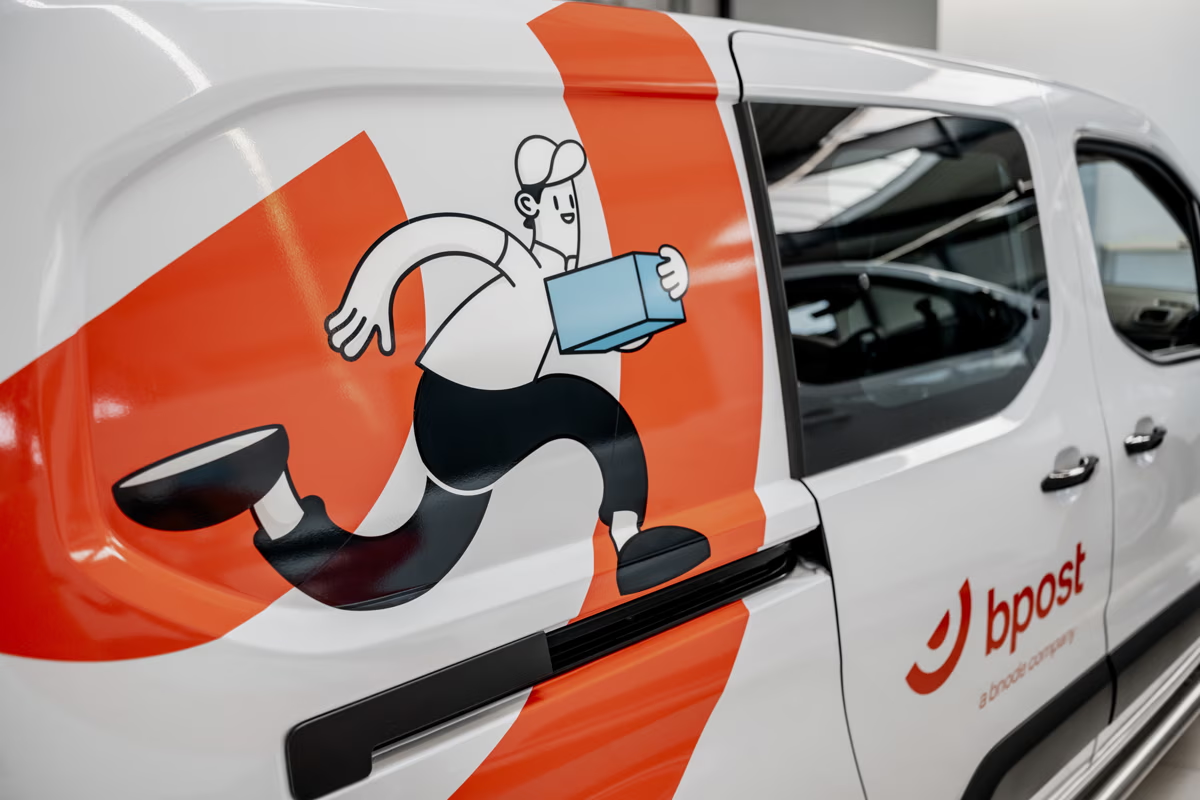
The Belgian postal company Bpost is accelerating the electrification of its delivery fleet. By the end of October, Bpost will have 4,165 electric delivery vans on the road, accounting for 42% of its delivery transporter fleet and four times the number it had three years ago.
The procurement pace corresponds to an increase of about 1,000 electric delivery vans per year.
This year alone, Bpost added 1,100 new electric delivery vans to the fleet, with nearly 900 already in use. Bpost will deliver the remaining vehicles over the coming weeks, replacing decommissioned internal combustion engine units. Many of the vehicles are sourced from Stellantis (Citroën).
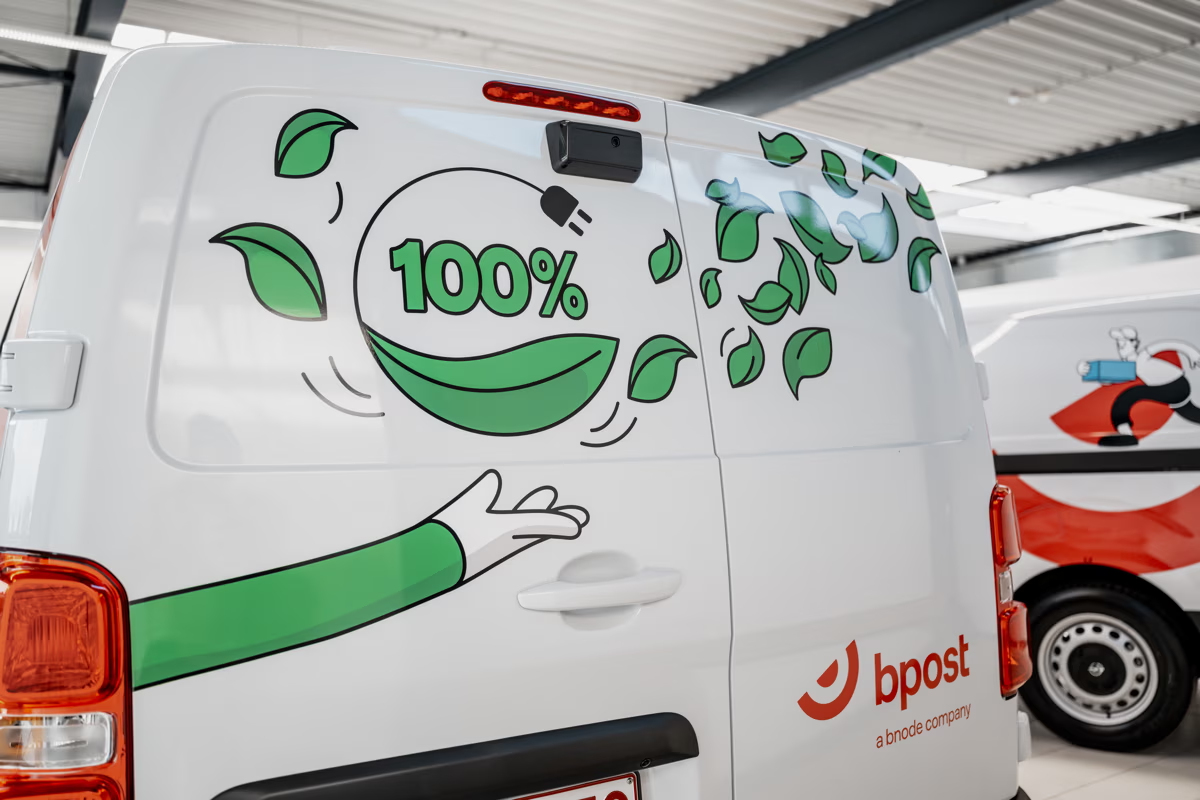
The new delivery vans are also the first to feature the new Bpost logo. Bpost will officially roll out the new visual identity in 2027.
Bpost has systematically expanded its electric fleet. In 2023, Bpost had about 1,000 electric delivery vans; by June 2024, that number had risen to over 2,000, and it is projected to reach 3,146 by autumn 2025. By the end of October 2026, the total will reach 4,165.
This latest expansion comes during one of the busiest periods of the year: in November and December, the company delivers more than 800,000 parcels per day in Belgium – on December 2nd, 2025, Bpost delivered a record 829,000 parcels.
85% emission-free by 2030
Today, 150 cities and municipalities (150 postal codes, to be precise) are served via zero-emission mail delivery routes. Bpost aims to ensure that, by 2030, 85% of its fleet used for the ‘last mile’ consists of CO2-emission-free vehicles.
This ambition aligns with Bpost’s objectives – Bpost is the group to which Bpost belongs – to reduce greenhouse gas emissions.
Electrification is not limited to vans, however. Bpost is also increasingly deploying electric bicycles, e-trailers, electric trucks, and double-decker trailers, depending on the requirements of its various logistics operations.
The company also focuses on further expanding its charging infrastructure and securing the necessary permits. Today, the company possesses 3,300 charging points at Bpost sites in Belgium, 4,165 electric vans, 3,013 electric bicycles, 556 eTrailers, 2 electric trucks, and 55 double-deck semi-trailers.
What about the neighboring countries?
The electrification of postal delivery in the Netherlands and France is also progressing steadily. Still, a comparison with bpost requires some nuance: the share of electric delivery vans is not the same as the share of fully zero-emission deliveries. The latter also includes deliveries made by bicycle, cargo bike, or on foot.
In the spring of 2026, PostNL put its 2,000th electric delivery van into service. According to the company, this means that 2,000 of its approximately 4,500 daily delivery runs are now electric.
In 2025, 33% of the final leg of mail and parcel deliveries in the Netherlands was emission-free, compared to 28% in 2024. This includes deliveries made by bicycle or on foot.
A key difference is that the Dutch postal delivery system already relies heavily on bicycles and pedestrians. Electrifying delivery vans matters most on routes that still require a motorized vehicle.
In France, 58% of La Poste’s entire vehicle fleet was electric, almost 39,000 electric vehicles. That figure encompasses more than just vans. La Poste aims to have a fully electric fleet for the first and last mile of its mail and parcel operations by 2035.


